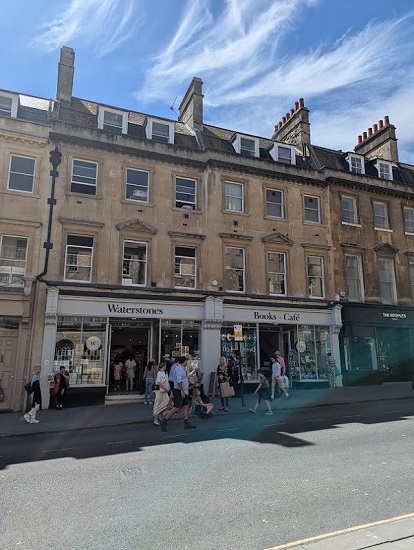
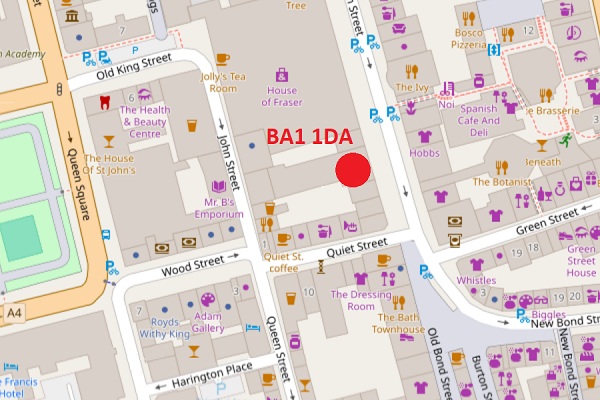
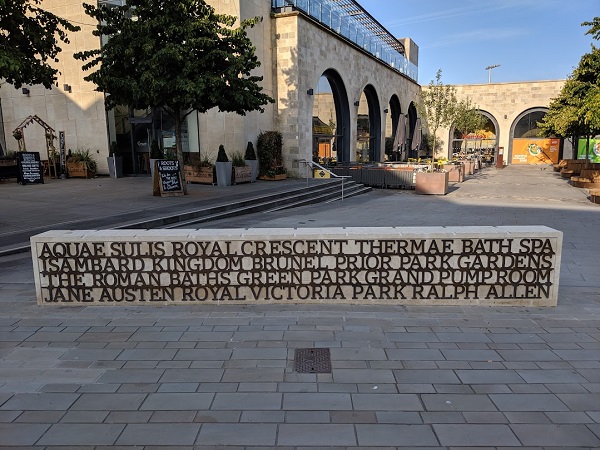
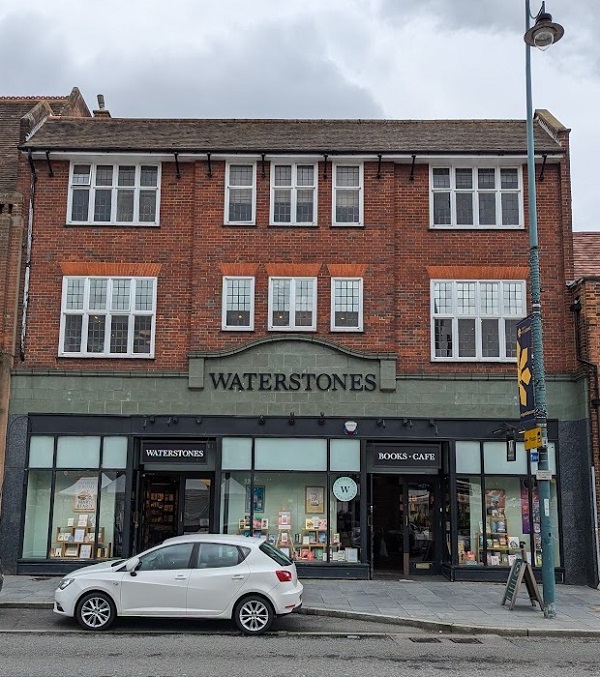
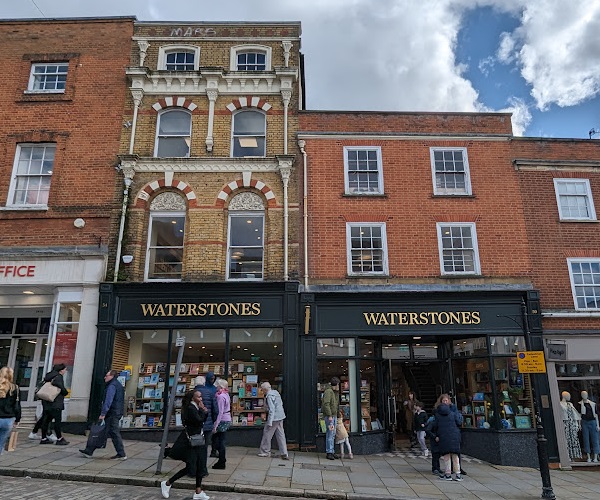
Bath is a city in Somerset renowned for its rich history, stunning architecture, and natural hot springs. It has been a UNESCO World Heritage site since 1987. It was established as a Spa town by the Romans, and named by them as Aquae Sulis. Bath experienced a boom in popularity in the 18th century, leading to the construction of many Georgian buildings. The Royal Crescent, the Circus, and Pulteney Bridge are iconic examples of this elegant architectural style. Lots of authors have made Bath their home over the years, and the most famous of these must surely be Jane Austen. Her novels Northanger Abbey and Persuasion are both set in the city. There are many attractions in the city which means it’s exceptionally popular with tourists. The most famous are the Roman Baths, Bath Abbey, The Royal Crescent and The Circus and the Bath Thermae Spa, but there are many other reasons to visit. It’s also the home to one of my closest branches of Waterstones! The shop, which is set over three floors, is located at numbers 4-5 Milson Street. It was originally two houses – part of a whole row (numbers 2-22) of large townhouses – and is Grade II Listed. It opened as a Waterstones in the 1980s.
The Circus and the Royal Crescent
The Circus is one of Bath’s most iconic architectural masterpieces, designed by John Wood the Elder and completed by his son (John Wood the Younger) in 1768. This sweeping crescent – a shaped row of 30 terraced houses – is one of the most recognisable landmarks in the city. Joined to The Circus by Brock Street is the Royal Crescent, which was also designed by the younger Wood. From above, it resembles a key!

OLYMPUS DIGITAL CAMERA

The aerial photograph of the Royal Crescent viewed from above was taken by Adrian Pingstone on 21st September 2005 and placed in the public domain.
The Roman Baths
The Roman Baths were constructed around 70AD during the Roman occupation of Britain. The site was originally a natural hot spring, which the Romans developed into a sophisticated complex for bathing and socialising. The museum on site houses a vast collection of artifacts recovered from the site, including coins, jewellery and items related to daily life in Roman Britain. Interactive displays and reconstructions help bring the history to life and the site is visited by around 1 million visitors per year. I’m lucky enough to be able to visit free with my Residents’ Discovery Card.
Pulteney Bridge and Weir
Pulteney Bridge was designed by Scottish architect Robert Adam and completed in 1774 – it is now Grade I listed. It was commissioned by William Pulteney, who wanted to connect the city with the Bathwick estate on the opposite bank of the River Avon which his family wished to develop. The bridge is Palladian in style, and is one of only four bridges in the world that has shops spanning both sides along its full length, the others being in Florence and Venice in Italy, and Erfurt in Germany. Pulteney Weir, which is a little way downstream from the bridge, was originally built to control the water flow and reduce the risk of flooding in the city. The current weir, with its distinctive curved design, was constructed in the early 1970s, although there have been various weirs at this location since the 1600s. The Weir featured in the 2012 film adaptation of “Les Misérables” as the location of the suicide of Inspector Javert.
Theatre Royal – clockwise from top left. 1. the original entrance in Beauford Square (this area features in the Netflix period Drama, Bridgerton), 2. the main entrance now, 3, 4 & 5. the Seven Dials Fountain, which features bronze casts of various actors’ hands.
Clockwise from top left – 1. view of Bath, 2. Bath Abbey, 3. Camden Terrace, 4 & 5. The Kennet and Avon Canal, passing through Sydney Gardens, 6. The Holborn Museum (Lady Danbury’s House in Bridgerton).
Bath – there’s lots to see here!






















 Janet's Adventures in Waterstones