Chichester – Monday 30th December 2024

Chichester is a Roman city and the county town of West Sussex. The Romans, who called it Noviomagus Reginorum, chose the location to build their town as it had good access to the sea, which allowed them to easily receive supplies from France and made it the perfect place for trade.  The Waterstones is located in a grade 2 listed building which was part of the Dolphin and Anchor hotel – the ballroom upstairs still has its chandelier from hotel days!

Chichester is also a Cathedral city, being home to the Cathedral Church of the Holy Trinity which was consecrated in 1108.  The Cathedral is home to some Roman remains which can be seen via a viewing panel in the floor.

The photos below, are: Shippams (2) – the well-known paste company was established in Chichester in 1786, but was sold in 1974.  When the factory was demolished, the facade was left.

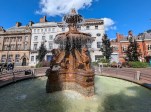
Chichester Market Cross (1746) and The Buttermarket (1808)

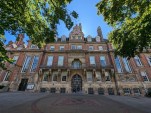
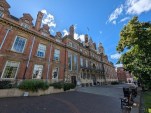
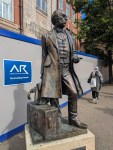
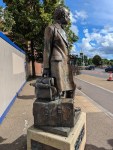
The Council House (1731) and John Keats statue – the poet stayed in Chichester in 1819.

Currently reading Mr Dickens and His Carol by Samantha Silva        


Winchester, High Street – Friday 11th October 2024

The second Waterstones in Winchester is located in an attractive two-storey shop in the High Street, but I have been unable to find out the history of the building, although from the mosaic tiling at the entrance, it was once a branch of Hatchard’s Booksellers. 

Winchester High Street 11th October 2024 (1)

Winchester High Street 11th October 2024 (1)

The Winchester Bollard Project

Since 2005 there has been an ongoing project to decorate bollards in the city.  Starting with 16, there are now apparently 28 bollards, but we only had time to spot a few as we didn’t have much time left on our parking, but some of them were being touched up, so it’s good that they’ve lasted so long.  Here are three – Da Vinci’s Mona Lisa, one celebrating Winchester’s Roman heritage and one for Queen Elizabeth II’s Diamond Jubilee in 2012.

Various shots of Winchester

Top row  – Winchester Guildhall, built 1875.  An ornate clock on the Lloyds bank building.
Middle row – Ghost signs for Nestle Milk on a former shop.  A channel of the river Itchen located in Abbey Gardens.
Bottom row – Winchester’s Coat of Arms.  The statue of King Alfred the Great. 


Winchester, The Brooks – Friday 11th October 2024

Winchester is a cathedral town in Hampshire which was, once upon a time, the capital of Wessex and the seat of King Alfred the Great, for whom there is a statue in the town.  Today, remnants of Winchester’s historical significance are everywhere, from its preserved medieval walls to the mighty cathedral that dominates the skyline.  It is also home to Winchester College, the oldest public school in the country.  There are two Waterstones in Winchester. The first we visited is located in a modern shop in the Brooks Shopping Centre.

Winchester The Brooks Map

Winchester Cathedral

The city’s Gothic cathedral, which was built between 1079–1532, is one of the largest in Europe with the longest nave in England, and the author Jane Austen is buried there.  The cathedral came within the brink of collapse in the early 1900s, but was saved when a diver called William Walker carried out repairs on the foundations of the cathedral to stop it from sinking into the ground.

Borrowed Breath

Some of the pieces from an exhibition called Borrowed Breath by sculptor Laurence Edwards, part of a set of fifteen inspired by Winchester Cathedral’s west window.

Currently reading:  Frankie by Graham Norton

Aberystwyth – Thursday 5th September 2024

Aberystwyth is a historic coastal town in mid Wales known for its spectacular sunsets and winter storms.  It’s a university town and a popular holiday destination.  The town has a mile-long Victorian promenade with a sweeping dark sandy beach.  It also has a funicular railway and a pier.  The Waterstones is located in the centre of town – I haven’t been able to find out the history of the building.

PXL_20240905_153652769

Aberywtwyth map

Aberystwyth Cliff Railway

Aberystwyth is home to the longest electric funicular cliff railway in Britain.  It opened in 1896, and carries passengers from the base of Constitution Hill to its summit, offering breathtaking panoramic views of the town and the surrounding coast.  We were here on a really hot day, so we were happy to find a café at the top serving beer and ice cream!

National Library of Wales / Llyfrgell Genedlaethol Cymru

The National Library of Wales was established in 1907 and is the largest library in Wales – it holds around 6.5 million books and magazines.  It’s a beautiful building inside and out, and the North Reading Room is especially attractive.  It’s open to visitors, so we popped in to take a look. 

Aberystwyth

Currently reading: Rainbow Valley (Anne of Green Gables #7) by L M Montgomer

Sudbury – Monday 8th July 2024

Sudbury in Suffolk is a medieval market town on the River Stour.  The English artist Thomas Gainsborough was born in the town in 1727 and there is a museum dedicated to him.  Sadly, we arrived quite late in the day, so we didn’t have time to do much exploring, but from what we saw it’s a pretty town.  The Waterstones opened in November 2023 and is located on the site of an old hotel called The Four Swans, which burnt down in 1997.  The hotel building was severely damage, and had to be demolished, and when rebuilt as shops, the design was made to look similar to the former hotel.   You can see a photo of the original building on this site.

PXL_20240709_145258730.MP

Sudbury map

Lavenham Guildhall

On our way to Sudbury (when the weather was nicer!) we stopped at Lavenham to visit the old Guildhall, which is now owned by the National Trust.   Built in the early 16th century for the Guild of Corpus Christi, this was one of four medieval guilds in Lavenham.  The decline in the woollen cloth trade saw the building repurposed as a prison, and then later a workhouse. It passed into NT ownership in 1951.  

Thomas Gainsborough’s house, and his statue in the town

The Thomas Gainsborough House picture above  is by John Firth, CC BY-SA 2.0

Leicester – Sunday 7th July 2024

Leicester is a diverse city in the East Midlands, which is possibly best known as the location where English King Richard III’s remains were discovered under a car park in 2012.  They were reburied in Leicester Cathedral three years later.  The city is also home to one of the oldest and largest outdoor covered markets in Europe, but unfortunately it wasn’t open the day we were there.  During the Industrial Revolution, hosiery, textiles, and footwear became the major trades and Leicester was granted city status in 1919.  The Waterstones is located in the Highcross Shopping Centre in the heart of the city.

Leicester map

Leicester Cathedral

The original Church of Saint Martin, Leicester was built around the year 900 and was rebuilt and enlarged between the 13th and 15th centuries.  More restoration work took place in the 1800s and it was made a cathedral in 1927.  It’s the final resting place of King Richard.  

Richard III’s Grave

Richard III Visitor Centre

Opposite the cathedral is the visitor centre, which was built over the area where the King’s remains were discovered.  The original position of the skeleton is projected onto the ground, as shown outlined in red in my photo below.

Guildhall Museum

The museum is a timber framed building, the oldest part of which was built in the late 14th century.  It’s free to visit, and I popped in on my way between the cathedral and the visitor centre. The Great Hall was closed for an event, but the rest of the building was very interesting.

The New Walk

New Walk is a Georgian pedestrian promenade which was established in 1785 and is around a mile long.  It’s very tranquil, as bikes and scooters are banned (although we did see a few!). It is a conservation area so that the character is preserved.

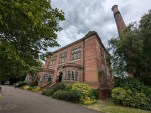
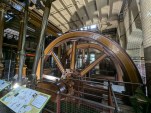
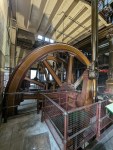
Below – Row 1. Abbey Pumping Station Museum. Row 2. Leicester Town Hall. Row 3. Statue of Thomas Cook, who began his travel company with a trip from Leicester station.

Currently reading:  The Survivors by Jane Harper and Standing in the Shadows by Peter Robinson