
Leicester is a diverse city in the East Midlands, which is possibly best known as the location where English King Richard III’s remains were discovered under a car park in 2012. They were reburied in Leicester Cathedral three years later. The city is also home to one of the oldest and largest outdoor covered markets in Europe, but unfortunately it wasn’t open the day we were there. During the Industrial Revolution, hosiery, textiles, and footwear became the major trades and Leicester was granted city status in 1919. The Waterstones is located in the Highcross Shopping Centre in the heart of the city.


Leicester Cathedral
The original Church of Saint Martin, Leicester was built around the year 900 and was rebuilt and enlarged between the 13th and 15th centuries. More restoration work took place in the 1800s and it was made a cathedral in 1927. It’s the final resting place of King Richard.


Richard III’s Grave


Richard III Visitor Centre
Opposite the cathedral is the visitor centre, which was built over the area where the King’s remains were discovered. The original position of the skeleton is projected onto the ground, as shown outlined in red in my photo below.


Guildhall Museum
The museum is a timber framed building, the oldest part of which was built in the late 14th century. It’s free to visit, and I popped in on my way between the cathedral and the visitor centre. The Great Hall was closed for an event, but the rest of the building was very interesting.


The New Walk
New Walk is a Georgian pedestrian promenade which was established in 1785 and is around a mile long. It’s very tranquil, as bikes and scooters are banned (although we did see a few!). It is a conservation area so that the character is preserved.


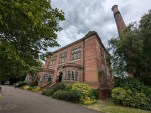
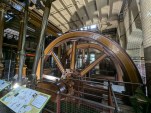
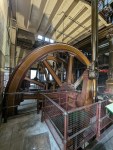
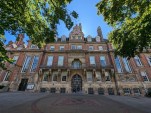
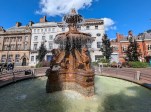
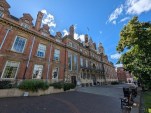
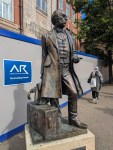
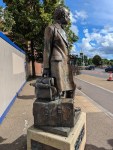
Below – Row 1. Abbey Pumping Station Museum. Row 2. Leicester Town Hall. Row 3. Statue of Thomas Cook, who began his travel company with a trip from Leicester station.
Currently reading: The Survivors by Jane Harper and Standing in the Shadows by Peter Robinson
 Janet's Adventures in Waterstones