Wolverhampton – Thursday 27th May 2021

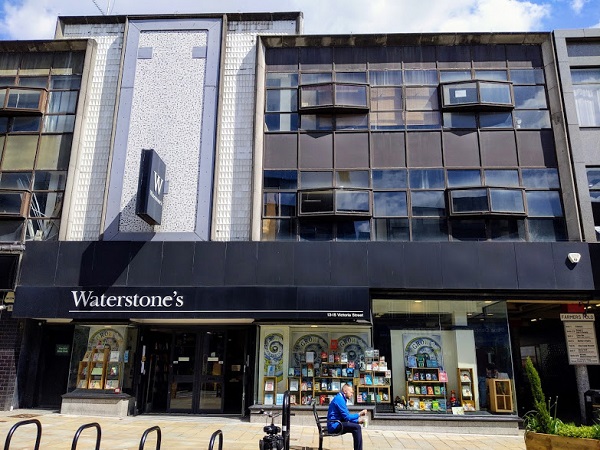
After our visit to the Red House Glass Cone museum, we popped to Wolverhampton for a late lunch.  Wolverhampton is a large market town in the West Midlands, which grew during the Industrial Revolution due to the wealth of minerals in the area and there is some interesting architecture if you look up.  The Waterstones is located in a modern building set over two floors. 

PXL_20210527_135509351b

Wolverhampton map

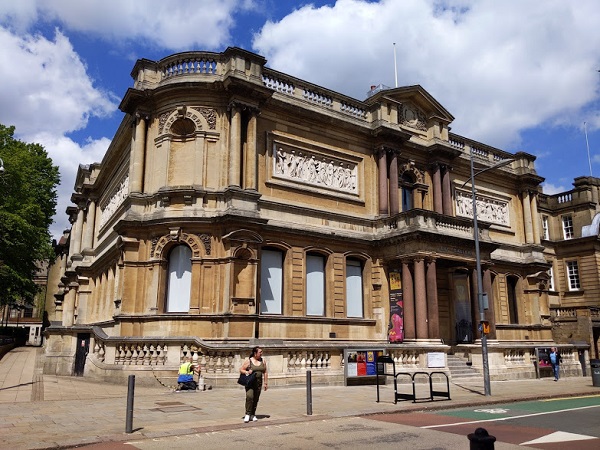
Unfortunately we didn’t have long to spend at Wolverhampton – I would have loved to have visited the town’s art gallery, but sadly we ran out of time as we had to head to our hotel.  

After dinner we had a nice walk along part of the Wednesbury Old Canal known as the Balls Hill Branch Canal.  It was very pretty and we discovered that there was a tram station nearby which we would be able to use for our trip into Birmingham the following day.

Wolverhampton Art Gallery

PXL_20210527_124001883

Balls Hill Branch Canal

Currently reading: The Last Bookshop in London by Madeline Martin and A Snowfall of Silver by Laura Wood


Merry Hill – Thursday 27th May 2021

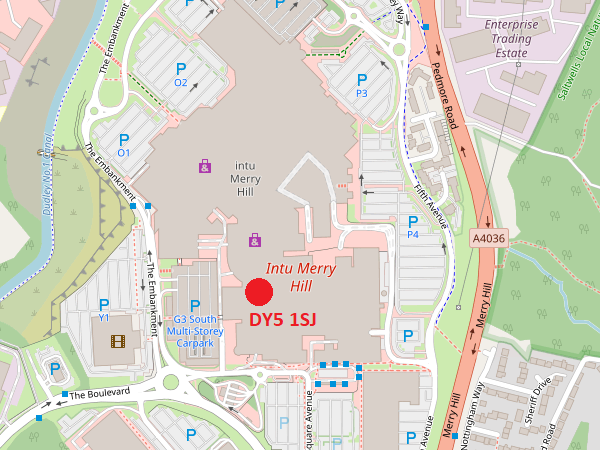
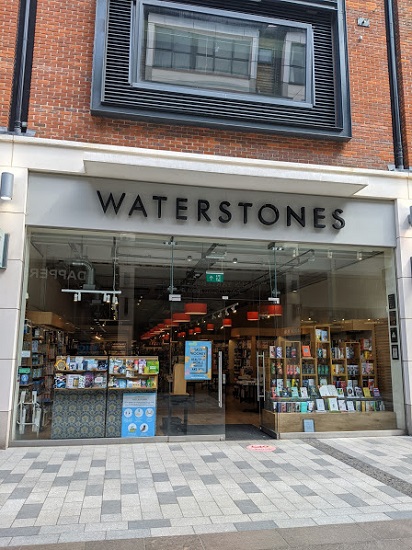
Merry Hill is a large shopping centre near Brierley Hill in the West Midlands constructed between 1985 and 1990.  The author Catherine O’Flynn got her inspiration for her book What Was Lost after working here.  In the novel, the centre is known as the Green Oaks centre. The Waterstones is set over two floors.

Merry Hill map

Red House Glass Cone, Wordsley

After leaving the centre we stopped at Wordsley to visit the Red House Cone, a glass cone, which was, as the name suggests, used in the production of crystal glass.  Now a Grade 2 listed building, it was the home of the company Stuart who made glass crystal there until 1936.  There is an interesting, free museum on the site which is worth a visit.  You can peer into the impressive cone, although health and safety currently prohibits entry. 

Whilst here, I bought Crossroads by Mark Radcliffe.

PXL_20210617_172907200

Newbury – Friday 7th May 2021

It was our wedding anniversary so we decided to have a day out, and maybe find a pub lunch outside as the weather was nice!  Having not been able to blog a Waterstones since last September we headed for Newbury in Berkshire, which was not a town we knew well. Newbury has been a market town since the 11th Century and the Kennet & Avon Canal passes through on its way from London to the Bristol Channel.   The Waterstones is located in the Parkway shopping centre just off the main shopping street. 

Newbury 07.05.21 (1)

Newbury map

Market Place

This area of Newbury contains some beautiful buildings, including The Town Hall, the Corn Market and the old Post Office.  The Town Hall was completed in 1881 replacing an older building.  The Corn Exchange opened in 1862 and is now a centre for arts.  The attractive old Post Office building dates from 1896 but suffered the same fate as many other post offices and closed in 2017 and is now located inside W H Smith!

The Town Hall

The Corn Exchange (l) and the old Post Office (r)

Kennet & Avon Canal

I bought the YA book A Snowfall of Silver by Laura Wood in Waterstones.

Newbury 07.05.21 (2)

Banbury – Saturday 12th September 2020

On our way home from our holiday we stopped at Banbury in Oxfordshire, which must surely be best known for featuring in the nursery rhyme Ride a Cock Horse and for its Banbury Cakes!  We have stopped here for coffee or lunch several times before, but didn’t realise we’d missed the main shopping area, which features an attractive market square and town hall.  The Waterstones is located in the Castle Quay Shopping Centre, which opened in the year 2000. 

IMG_20200912_111658

Banbury map

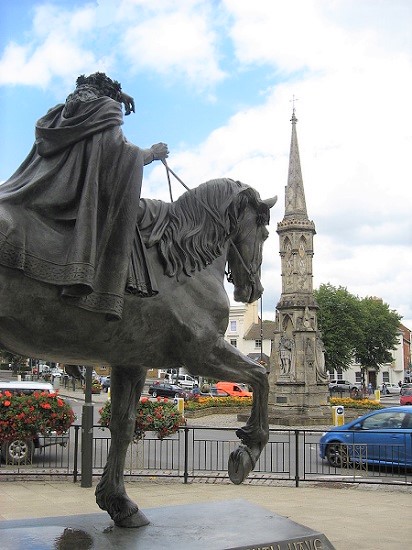
The ‘Fine Lady’ statue and Banbury Cross

There used to be several crosses in Banbury, but they were destroyed by the Puritans in the early 17th century.  A new cross was erected in 1859, and a nearby statue of the ‘Fine Lady’ from the nursery rhyme was unveiled nearby by Princess Anne in 2005.

There are many versions of wording for Ride a Cock Horse.  The best-known of these must surely be:

Ride a cock-horse to Banbury Cross,
To see a fine lady upon a white horse;
With rings on her fingers and bells on her toes,
And she shall have music wherever she goes.

Unfortunately I managed to cut the top off the cross in my photograph!  The one here is used by permission under the Wikipedia Creative Commons licence.  *See attribution below.

800px-LadyAndCross

Banbury Market Place and The Old Corn Exchange

*By Jongleur100 – Own work, Public Domain

Coventry – Thursday 10th September 2020

The last part of our holiday was a two night stay in Coventry in the West Midlands.  Coventry is the 11th largest city in the UK, well-known for its car industry and the legend of Lady Godiva and Peeping Tom for which there is a statue in the city’s central square, Broadgate.

Coventry was heavily bombed by the Luftwaffe in November 1940, causing considerable damage, and much of the city had to be rebuilt.  The centre is therefore very modern, but some of Coventry did escape the bombing – notably Medieval Spon Street.  Many of the buildings here were originally in different parts of the city, but having survived the bombs, they were relocated here and the area is now a conservation area.   We liked Coventry – there is plenty to do there.  The Waterstones is located not far from Spon Street in a modern building in the shopping area known as Lower Precinct.
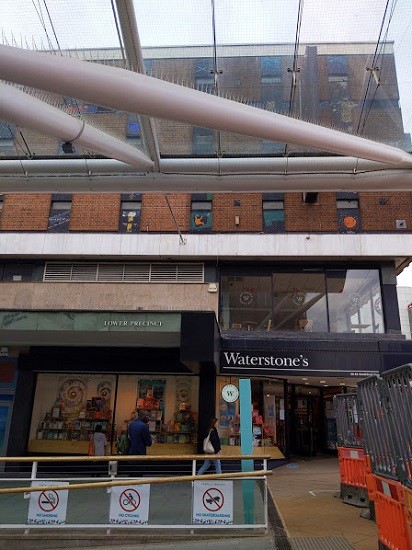
IMG_20200910_162835

Coventry map

One casualty of the bombing raids was St Michael’s Cathedral which was left with just the outer walls and its spire.  A new cathedral, also called St Michael’s, was built next to the ruins of the bombed one and opened its doors in 1962.  Most (but not all) cathedrals are built in a west to east orientation, with the altar being at the east end, but the new cathedral is perpendicular, the altar being at the north end. This was so the original building could be left as a memorial to all civilians injured or killed by war or other conflicts.  Understandably the new cathedral is in the modernist style and has some beautiful features including its attractive stained glass.  I think it’s a lovely building. 

Cathedrals – old and new (outside)

Coventry ‘new’ Cathedral (inside)

On the outside of the cathedral is a large sculpture by Jacob Epstein.  Entitled St Michael’s Victory over the Devil it symbolises the triumph of good over evil. Michael is the Patron Saint of Soldiers, doctors, and grocers, amongst other things!

Coventry was home to the Coventry Sewing Machine Company from the 1860s.  They went on to bicycle manufacturing which was popular in the area.  By the early 20th century this industry had been joined by the motor trade, and many notable companies set up factories in the Midlands, including big names such as Jaguar, Hillman, Morris, Triumph and the French company Peugeot. Coventry houses an impressive transport museum with many exhibits hailing from the area.   On the day we visited it was really quiet – the only people there apart from the few staff members were the two of us and a family of four!  I imagine that during non-Covid times it is much busier.

Lady Godiva Statue

(The outside photos of Coventry Cathedral  were taken in 2012 on a previous visit to the city)

Market Harborough – Thursday 10th September 2020

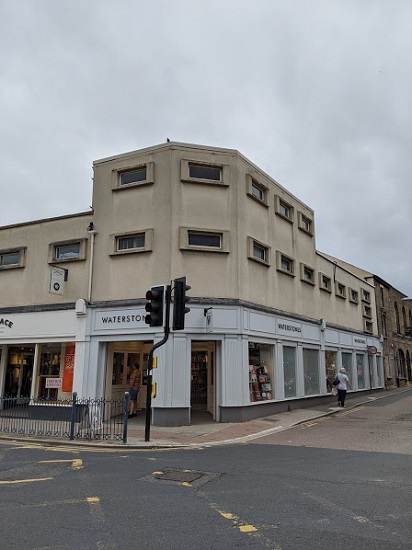
Our next destination was Market Harborough, a market town in Leicestershire.  The town is very picturesque, and one of the loveliest buildings is the Old Grammar school, which is fairly unusual in that it is was built on stilts so that the butter market could be accommodated underneath.  The Waterstones is located in a large building that was possibly built in the 1930s.  I bought a copy of Tim Waterstones’ autobiography here!

Market Harborough map

The Old Grammar School

Market Harborough was also the site of R & W H Symington & Co Ltd’s factory which made corsets in the nineteenth and twentieth centuries.  The building is now council offices and also houses a museum and the town’s library.

Kettering – Thursday 10th September 2020

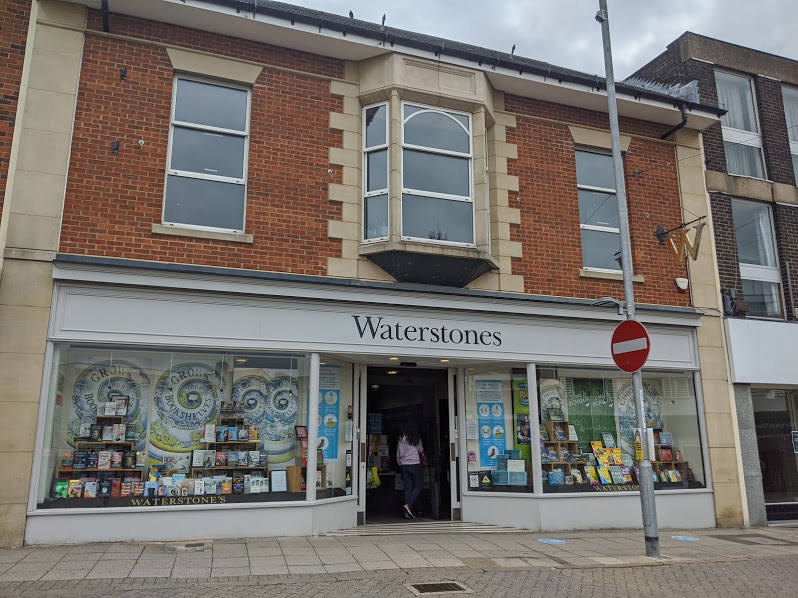
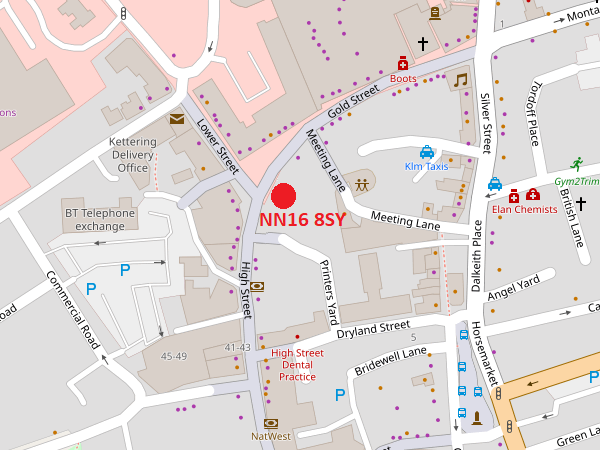
After our stay in Hertfordshire we were heading across to Coventry for a couple of nights.  We planned to stop for coffee in Kettering, but on the way into the town they had electronic signs warning that the Covid19 rate was exceptionally high in the area, so we decided not to stay for too long, so we parked on the outskirts of the town and went to visit the Waterstones, which is located in the main High Street shopping area. 

IMG_20200910_113623

Kettering map

Hitchin – Wednesday 9th September 2020

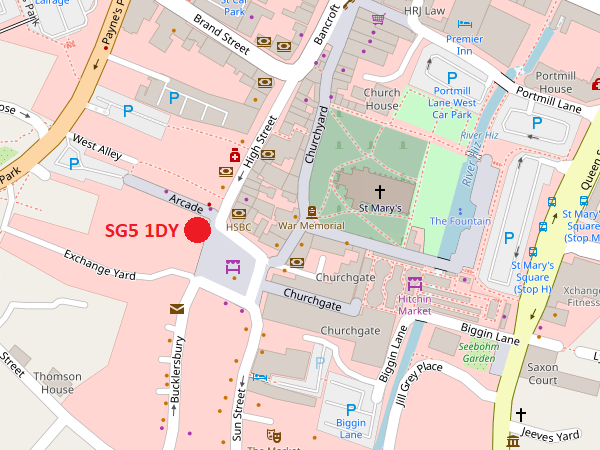
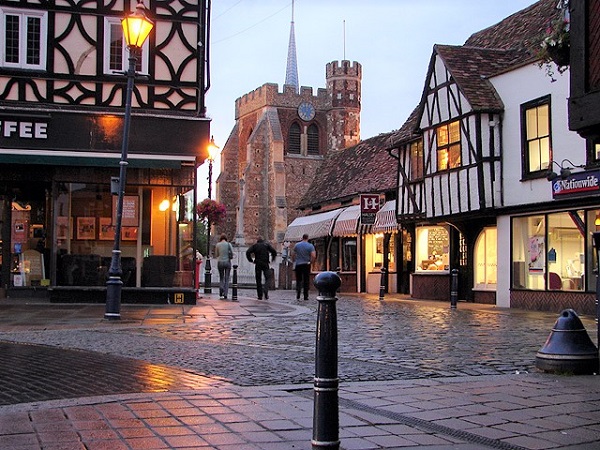
Market town Hitchin is just a short trip from where we were staying in Letchworth, so we stopped there for a late lunch on our way back from our day out.   We had watched the BBC TV series Doctor Foster starting Suranne Jones which was filmed here – it was interesting to see the town in real life!  The market square is very attractive but we didn’t stay long enough to explore properly.  The Waterstones is located on the edge of the square.

Hitchin map

TL18422901
TL18422901

The last photograph is used with permission under the Creative Commons Licence.  I have lightened it very slightly, and made it a bit smaller, as allowed under the terms of the licence.   Photo © John Lucas (cc-by-sa/2.0)

Bedford – Wednesday 9th September 2020

After leaving St Neots we headed across the border into Bedfordshire to the county town.  During World War 2, the American Big Band leader Glenn Miller was stationed near Bedford and performed many concerts in the town. .  There is a statue commemorating him on the Corn Exchange building.  The Waterstones is located in a modern shop in the main shopping area.

IMG_20200909_115234

Bedford map

Glenn Miller

Reflections of Bedford is an artwork by sculptor Rick Kirby.  It was commission to represent brick and lace, which were two industries that were prominent in Bedford.  Apparently it is illuminated at night – I imagine it looks quite striking. 

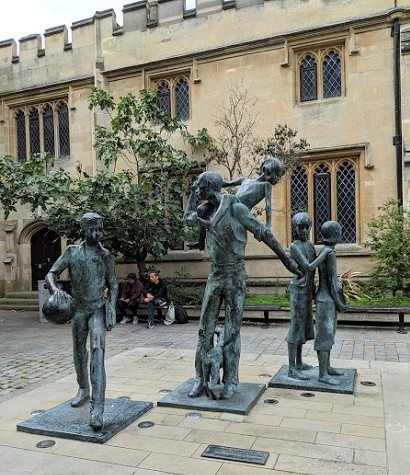
The Meeting depicts a man with four children and a dog.  It was unveiled in 1996 and is by John W Mills.  I have been unable to find out whether it was created for a specific purpose, but I really like it.

Bedford 9th September 2020 (17)

St Neots – Wednesday 9th September 2020

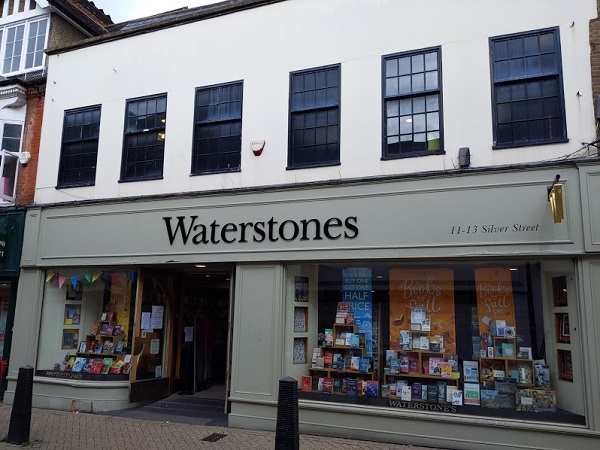
St Neots is a market town on the banks of the Great Ouse River and is the largest town in Cambridgeshire.  It was named after a Cornish monk, St Neot, whose remains were transferred to the town at the end of the tenth century – he is the patron saint of fish!  The Waterstones is located in the main shopping street near to the market square.  Waterstones occupied this shop until 2014, but moved out after being unable to agree a new lease.  It returned to the same building three years later.

IMG_20200909_103501

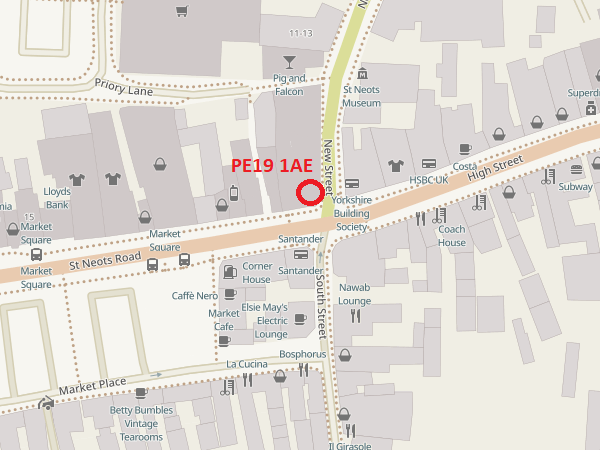
St Neots map

Below, clockwise from top left

The St Neots Sign, the Market Square, the Great Ouse River