Hitchin – Wednesday 9th September 2020

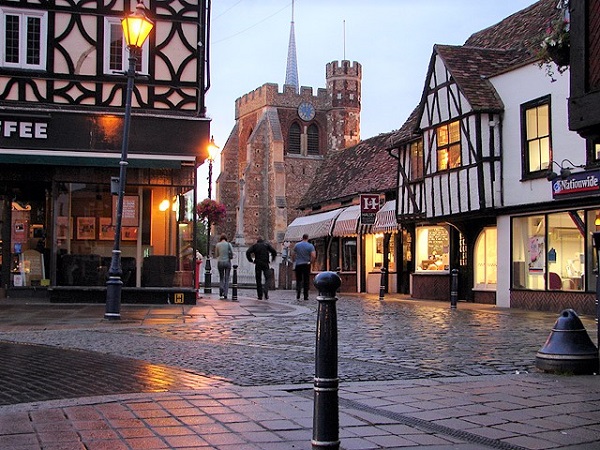
Market town Hitchin is just a short trip from where we were staying in Letchworth, so we stopped there for a late lunch on our way back from our day out.   We had watched the BBC TV series Doctor Foster starting Suranne Jones which was filmed here – it was interesting to see the town in real life!  The market square is very attractive but we didn’t stay long enough to explore properly.  The Waterstones is located on the edge of the square.

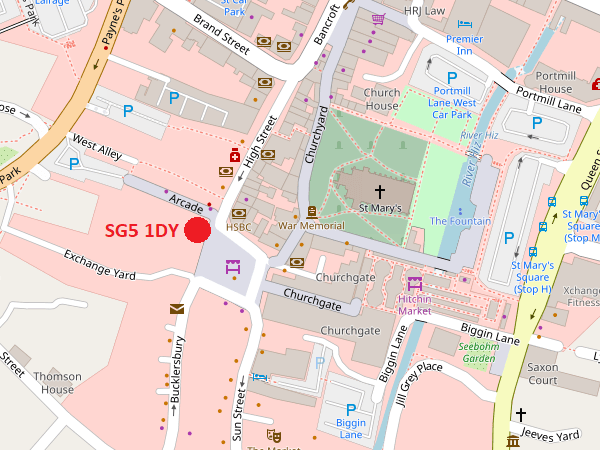
Hitchin map

TL18422901
TL18422901

The last photograph is used with permission under the Creative Commons Licence.  I have lightened it very slightly, and made it a bit smaller, as allowed under the terms of the licence.   Photo © John Lucas (cc-by-sa/2.0)

Bedford – Wednesday 9th September 2020

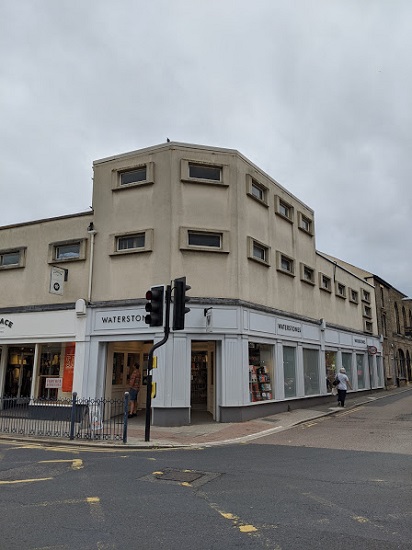
After leaving St Neots we headed across the border into Bedfordshire to the county town.  During World War 2, the American Big Band leader Glenn Miller was stationed near Bedford and performed many concerts in the town. .  There is a statue commemorating him on the Corn Exchange building.  The Waterstones is located in a modern shop in the main shopping area.

IMG_20200909_115234

Bedford map

Glenn Miller

Reflections of Bedford is an artwork by sculptor Rick Kirby.  It was commission to represent brick and lace, which were two industries that were prominent in Bedford.  Apparently it is illuminated at night – I imagine it looks quite striking. 

The Meeting depicts a man with four children and a dog.  It was unveiled in 1996 and is by John W Mills.  I have been unable to find out whether it was created for a specific purpose, but I really like it.

Bedford 9th September 2020 (17)

St Neots – Wednesday 9th September 2020

St Neots is a market town on the banks of the Great Ouse River and is the largest town in Cambridgeshire.  It was named after a Cornish monk, St Neot, whose remains were transferred to the town at the end of the tenth century – he is the patron saint of fish!  The Waterstones is located in the main shopping street near to the market square.  Waterstones occupied this shop until 2014, but moved out after being unable to agree a new lease.  It returned to the same building three years later.

IMG_20200909_103501

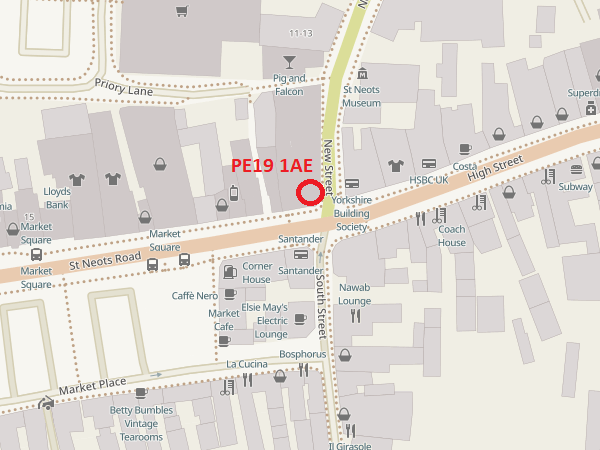
St Neots map

Below, clockwise from top left

The St Neots Sign, the Market Square, the Great Ouse River


Cambridge – Tuesday 8th September 2020

Cambridge – where to start?!  I had been before, but years ago when I was a small child, and the only memory I had from that time was of me dropping my Dad’s very expensive camera that I had insisted on wearing, and being worried it was broken (it wasn’t, fortunately)!  Peter and I first visited together on the weekend of my birthday in 2016 on a sunny Saturday, and the city was so rammed with tourists (like us!) that we didn’t really explore it properly.  This time we went on the train (with our masks on) from Letchworth on a very sunny Tuesday in September and the city was considerably quieter – obviously due to it being a weekday during an pandemic! 

Cambridge is best-known for being a university city.  Although it was not possible to visit the various colleges, we did plenty of walking.  The city is beautiful and one I would definitely like to revisit again when we can look at the places closed due to Coronavirus. The Waterstones is located in a four-storey building in the heart of the city.

The Great Gate at Christ’s College Cambridge

IMG_20200908_155018

This gate dates from the early 1500s and was restored in 2018.  An article about the restoration on the BBC claims that “It was built by Lady Margaret Beaufort, the grandmother of Henry VIII…”! Although I doubt she actually got her hands dirty, it was she who founded the college in the early years of the 16th Century. 

The Gate of St John’s

Lady Margaret also established St John’s College.  She died before the building work was completed.  Notable alumni include poet William Wordsworth and abolitionist William Wilberforce.

The Round Church
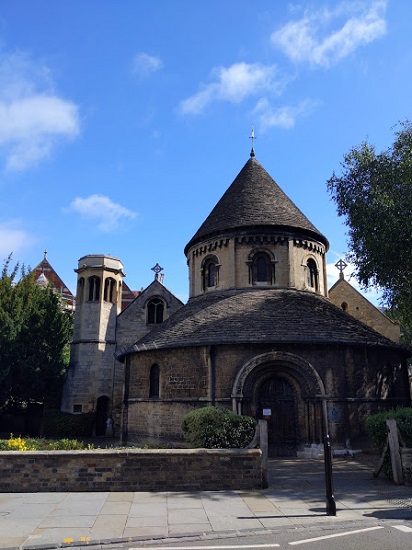
IMG_20200908_111055

Officially the Church of the Holy Sepulchre, the Round Church was built in about 1130 and is one of four such churches still in use in England.  We were unable to visit on this occasion but I would like to go back. 

The Mathematical Bridge

This is a wooden bridge which crosses the River Cam.  It is built from entirely straight lengths of wood but appears in the form of an arc!  It is a Grade II listed building.  An urban myth that Sir Isaac Newton built this is untrue, as he died 22 years before the bridge was constructed! 

The Corpus Clock

This clock is on an outer wall of Corpus Christi College and was unveiled in 2008 by Stephen Hawking.  Inventor and Horologist John C Taylor, who is an alumnus of Corpus Christi, donated substantial funds in order to transform a bank into a brand-new library for the college.  He added the clock to the wall outside.  The creature on the top is, according to Taylor, not a grasshopper, but rather a ‘Chronophage’ – a time-eater!

Views of Cambridge

Welwyn Garden City – Monday 7th September 2020

Welwyn Garden City is, as the name suggests, one of the Garden Cities created in the first half of the 20th century. The first was Letchworth, where we were staying for a few days. The idea, conceived by Ebenezer Howard, was to create a new town that took the best parts of the country and coupled them with the best parts of the city to create Garden Cities. Welwyn Garden City was the second of these, founded in 1920, and the model was adopted by many other countries.   Much of Welwyn is built in Neo-Georgian style, including the Waterstones which has a light and airy feel.

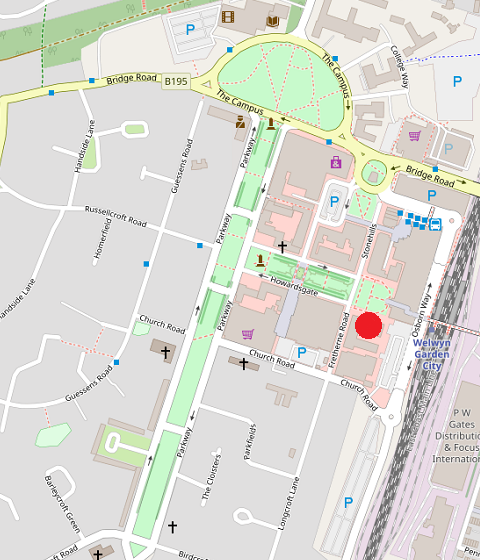
Welwyn map

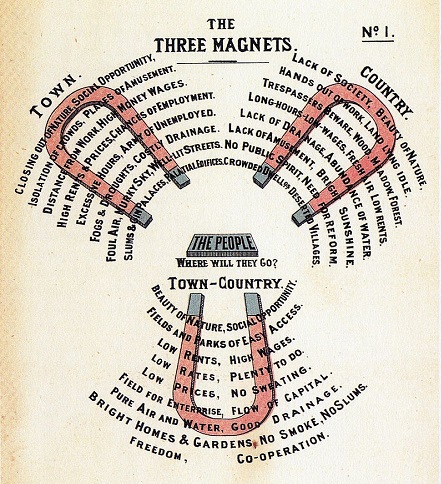
The photo below illustrates the thinking behind the creation of the Garden Cities – The Three Magnets.  The magnet at the bottom details a vision of utopia – I was rather amused by the suggestion of ‘No Sweating’!

Diagram_No.1_(Howard,_Ebenezer,_To-morrow.)

The tree-lined streets around a central green area are a key component of Welwyn Garden City.  Henry Moore’s statue Knife Edge has been loaned for the whole of 2020 in order to mark the centenary of the town.

Hatfield – Monday 7th September 2020

After leaving Harpenden we decided to head to Welwyn Garden City for lunch, and on the way we briefly stopped at Hatfield, just to visit the Waterstones.  Hatfield was a village, but when a new town in the area was proposed it was decided that rather than redevelop the village it would be created on the opposite side of the existing railway line – it was completed in the 1950s.  The Waterstones in Hatfield is situated in the Galleria designer which opened in the 1980s.  It has the feel of an airport terminal about it!

IMG_20200907_125153

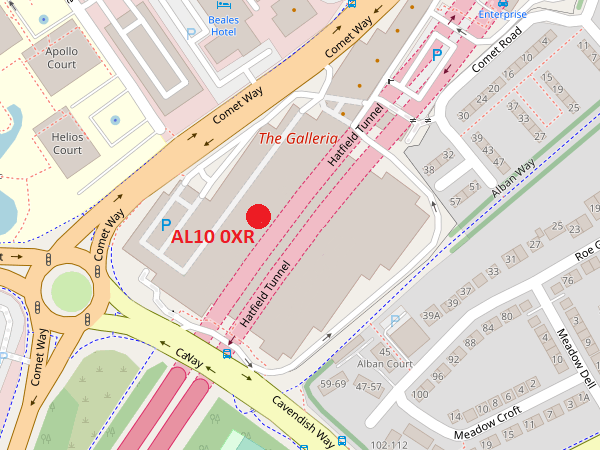
Hatfield map

Harpenden Books – Monday 7th September 2020

Harpenden is a hugely popular town in Hertfordshire, where property prices are more than twice the national average.  The town centre has a village feel to it with plenty of independent shops and cafés alongside the more recognised chains.  The Waterstones here is one of four that are styled to look like independent bookshops (the others being The Rye Bookshop, Southwold Books and The Blackheath Bookshop). 

IMG_20200907_112314

Harpenden map

Park Hall

Park Hall is located near to the Harpenden sign on the south side of the town. It was a school between 1850 and 1897. It became council offices and was then used by the ARP during World War 2.  It is now used as a community hall. 


Didcot – Saturday 5th September 2020

We decided to spend a few days in Hertfordshire, as this is not a part of the country either of us had stayed in before.  We thought it would be good to stay in one of the ‘Garden Cities’, so we decided on Letchworth.  On the way we stopped for lunch at Didcot in Oxfordshire.  We hadn’t visited here before, but both knew Didcot for its power station cooling towers which were visible from the Paddington to Bath GWR train which we both used regularly – the towers have since been demolished.   The Waterstones here is located in a modern shopping centre.

Didcot map

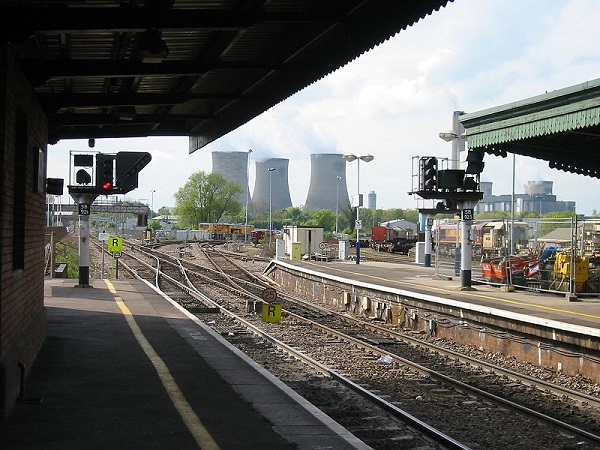
Didcot Cooling Towers

800px-Didcot_Pkwy_Plat3

Leighton Buzzard

We stopped at Leighton Buzzard after leaving Didcot.   Mary Norton, author of  The Borrowers‘ series, and the books on which the Disney film Bedknobs and Broomsticks was base lived here when she was a child.  There is a blue plaque on her house, which is now a school.

Currently reading:  The Wild Silence by Raynor Winn

The photo of Didcot Parkway station with the cooling towers in the background is used courtesy of Wurzeller under the Wikipedia Creative Commons Attribution-Share Alike 3.0 Unported license, with thanks to him.  It has been reduced in size from the original image.


The image of the market cross at Leighton Buzzard is used courtesy of M J Richardson with the attribution M J Richardson / 15 Century market cross, Leighton Buzzard / CC BY-SA 2.0, with thanks.  It has bene reduced in size from the original image.

Worcester – Saturday 18th July 2020

As Lockdown restrictions were partly lifted on 4th July, allowing hotels to open, we decided to book a couple of nights away in Worcester.  Worcester is a city and also, as the name suggests, the county town of Worcestershire.  It stands on the River Servern in the shadow of Worcester Cathedral, but unfortunately, due to visiting restrictions, we were unable to visit the Cathedral on this occasion.  The city has varied architecture including several pretty timber-framed buildings in Friars’ Street and a wonderful Guildhall, built in 1721.  It is well worth a visit, and entry is free (at the time of writing).  The Waterstones is in a modern shopping centre.

mvimg_20200718_130713

Worcester map

Edward Elgar

The English composer was born near Worcester and his family moved to the city when he was two.  He remained there for around 30 years before moving to London.  He eventually moved back and died in the city in 1934 after being diagnosed with terminal cancer.  I love lots of Elgar’s works – I quite fancy having his ‘Nimrod’ from Enigma Variations played at my funeral (hopefully that’s many years away!).

The Guildhall

Currently reading:  Wednesday’s Child (Inspector Banks #6) by Peter Robinson and George Orwell’s Diaries. 

I am a bit behind on entries as WordPress did an update and I found it quite tricky until someone sent me a video to show how to post using the Classic layout, so I have a bit of catching up to do.  Unfortunately, it appears I am no longer able to justify the right margin, but that was the least of my worries!


Farnham – Saturday 4th January 2020

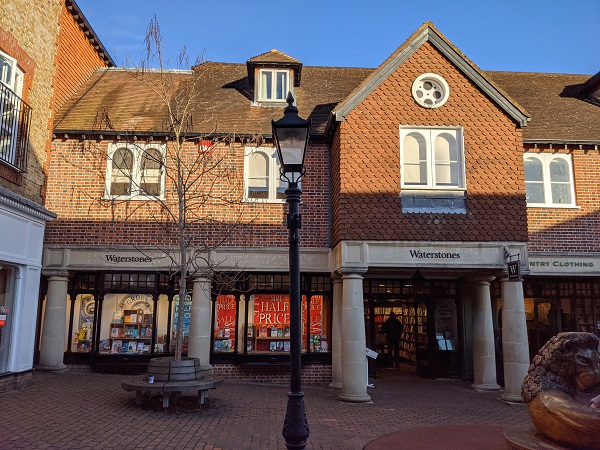
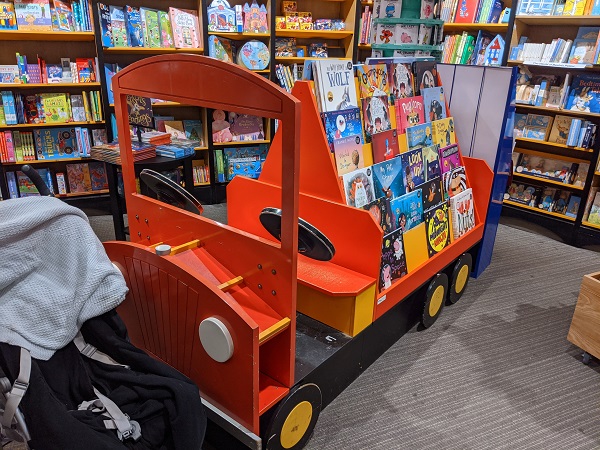
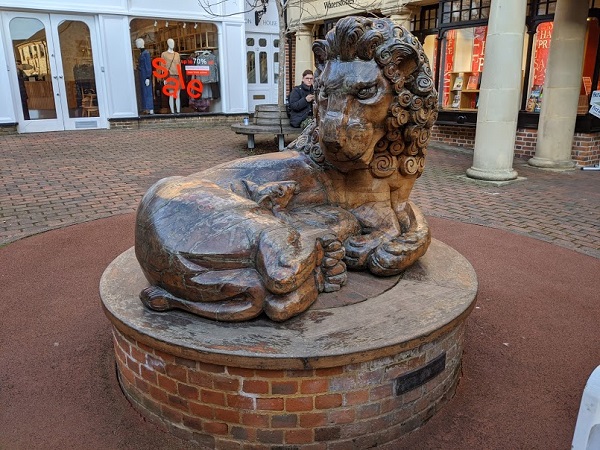
Farnham is a picturesque market town in Surrey which is mentioned in the Domesday Book.  When it was documented in 1086 it showed a population of 89 households which made it one of the largest settlements recorded.  The Waterstones is located in Lion & Lamb Yard.  The open-air shopping centre was named after a hotel that used to be located on the High Street on the front of the site, and was also the location of a grocer’s warehouse owned by William Kingham & Sons.  The sculpture, which is made of teak, was made in 1986 by Edwin Russell.

Windsor’s Almshouses

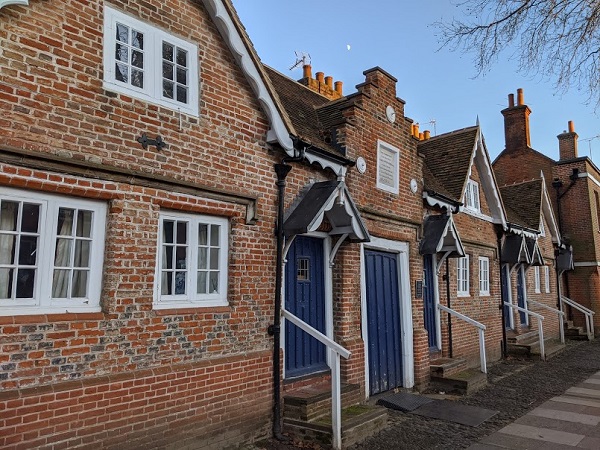
These attractive Almshouses were funded by Andrew Windsor, a landed gentleman, who intended them for local tradesmen who had fallen on hard times.  Opened in 1619 they are still used for this purpose today.